· Alex Harris · Growth · 8 min read
Bundaberg’s Agent Internet Opportunity: Cloudflare, AI Crawlers, and How Local Tourism Businesses Can Monetise the Next Wave in 2026
Bundaberg’s visitor economy is valued at $500 million and supporting 4,300 jobs—yet AI agents are rewriting how travellers discover Mon Repos turtles and Southern Great Barrier Reef diving. Here’s what Cloudflare’s pay-per-crawl and agent monetisation tools mean for local operators, and three practical ways Bundaberg businesses can turn the shift into revenue.

Bundaberg’s tourism sector is no longer a side story—it is a $500 million engine contributing 6.4% of Gross Regional Product and supporting 4,300 local jobs. Domestic visitors alone spent $1.5 billion across the Bundaberg and Southern Great Barrier Reef region in the nine months to September 2025, while international overnight spend hit a record $139.4 million. The Southern Great Barrier Reef welcomed 88,000 international visitors (up 9.8% year-on-year), many of them staying an average 22.2 nights and seeking exactly what the region does best: Mon Repos loggerhead turtles and world-class diving from Lady Musgrave Island.
That growth is real. But the way people (and now machines) find those experiences is changing fast. Cloudflare has begun rolling out tools that let websites charge AI agents for access to content, data and tools. For Bundaberg operators—from dive boats in Burnett Heads to eco-lodges in Bargara and turtle-tour providers—this is not abstract tech news. It is the next layer of the online landscape they already compete in.
The Old Bargain of the Internet
For two decades the deal was simple. You published a website. Search engines crawled it. Humans clicked through. You monetised the visit—ads, email capture, direct bookings, affiliate links. The content created value and the website captured the attention that paid for it.
AI agents break that loop. An agent can read a page, extract the useful answer (“best time to see turtle hatchlings at Mon Repos”, “visibility at Lady Musgrave this week”, “dive operator that includes gear hire”), and deliver it to the user without the user ever landing on your site. The content still creates value; the visit—and the revenue that came with it—disappears.
Publishers have felt this first. The bigger shift is that agents will treat the internet the way software treats infrastructure: they will request data, call tools, compare products, and take action. That requires a new pricing model for machine usage. Humans will not pay a third of a cent to read a recipe. Machines will, if the resource helps them complete a job.
What Cloudflare Is Actually Building
Cloudflare’s recent moves give site owners three practical levers:
- AI Crawl Control – visibility and control over which AI crawlers can access content, with the ability to allow, block or charge.
- Pay Per Crawl – the direct monetisation path. A crawler either presents payment intent or receives an HTTP 402 “Payment Required” response with pricing. Cloudflare handles verification at the edge.
- Monetisation Gateway – the broader vision. Any resource behind Cloudflare (a web page, a dataset, an API, an MCP tool call, a search index) can carry payment rules. The payment rail is x402, built on the long-dormant HTTP 402 status code. The request itself becomes the transaction—no accounts, no checkout flows, no sales calls.
In plain English, Cloudflare is making paid access feel like part of the internet’s plumbing. Tiny, useful resources can become businesses because machines do not care about fractional-cent payments if the data is clean, trusted and useful.
Agents also need structure. Humans tolerate messy websites; agents need clean doors—LLM.txt files, structured product feeds, clear pricing pages, honest comparison data, and reliable APIs. Cloudflare’s AI Index work points in the same direction: make websites easier for AI systems to understand and use.
Why This Matters for Bundaberg Right Now
Bundaberg’s visitor economy is already digital. Marketing campaigns have reached 6.6 million people and generated tens of thousands of leads for operators. International travellers research “Mon Repos turtle tours”, “Lady Musgrave diving from Bundaberg” and “Bargara eco-lodge” long before they book. Domestic holiday-makers do the same.
When AI agents become the default research and booking interface, the operators whose websites, data and tools are easiest for those agents to understand, trust and transact with will capture the bookings. The rest will see their content used without the visit.
The same $500 million tourism sector that grew GRP 16.8% and employment 16.5% last year is therefore facing a new requirement: agent readiness. Clean, structured, trustworthy digital resources are no longer a nice-to-have for local SEO—they are becoming the gateway that agents walk through.
Three Practical Startup Ideas for the Bundaberg Context
The opportunity is not limited to global tech companies. The same principles that apply in Miami med-spas or US roofing markets apply here, scaled to the Southern Great Barrier Reef.
1. Niche Data Refinery for Regional Tourism
Valuable information about Bundaberg tourism is messy and fragmented: dive operator schedules and prices, real-time visibility reports, turtle nesting forecasts, accommodation availability, review sentiment, permit and weather data, competitor offers. An agent helping a family plan a week in Bargara or a dive group book Lady Musgrave would pay for clean, fresh, structured versions of that data.
A practical wedge: start with one city (Bundaberg/Bargara) and one vertical (dive and snorkel operators, or turtle-tour and eco-accommodation). Manually track 50–100 businesses. Produce a handful of high-value outputs—local pricing maps, competitor gap reports, review-complaint summaries, monthly market-movement snapshots. Sell the human version first to marketing agencies, consultants and larger operators who already sell into the niche. Later turn the spreadsheet into a dashboard, then an API or MCP tool that agents can query and pay for per lookup.
The filter is simple: the data must be valuable (better decisions make or save money), repeatable, changing, fragmented and annoying to collect. Bundaberg’s tourism assets meet every criterion.
2. Agent Readiness for Local Tourism Businesses
This is “SEO for the agent internet”. Most tourism websites still hide pricing, bury key details in PDFs, use marketing speak, and update infrequently. When a traveller asks an AI assistant “best dive operator from Bundaberg for a family with two kids who want to see turtles”, the agent needs clear answers about who the product is for, what it costs, what it includes, risks, and how it compares.
The sales motion is straightforward. Run 20–50 buyer-intent prompts across major AI tools for a specific operator or category. Show the business owner the screenshots: “When people ask AI about your category, you don’t appear / pricing is wrong / the competitor’s docs are cleaner.” Then sell the fix—an agent-readable source of truth: clean LLM.txt, structured pricing and availability pages, honest comparison content, schema markup, product feeds, and a monthly measurement loop that re-runs the prompts.
For Bundaberg this can start as a services business (audit + cleanup for $3k–$10k) and productise once the same missing pieces keep appearing across dive operators, lodges and tour companies. Local businesses already feel the pressure of AI search; the ones that make themselves easy for agents to recommend will keep the bookings that currently flow through Google and direct websites.
3. Expert Archives as Agent Tools
Bundaberg and the Southern Great Barrier Reef sit on decades of specialised knowledge: ranger-guided turtle interpretation at Mon Repos, dive-master expertise on local sites, conservation data, sustainable-tourism practices, and local food-and-produce stories. Most of that knowledge lives in videos, blog posts, PDFs, training notes and the heads of experienced operators.
The startup is archive-to-tool. Pick one expert (or small group) with a deep, specific archive and one painful job. Example: turn a collection of dive briefings and site reports into a tool that lets an agent generate a personalised dive plan or safety briefing. Or package turtle-conservation knowledge into a tool that critiques a visitor’s itinerary for sustainability. Charge a modest monthly fee, bundle into a community, or license to agencies and booking platforms. When agent payment rails mature, the same resource can charge per use.
Creators and operators already have distribution and trust. Packaging the expertise so agents can use it on demand simply multiplies that asset.
The Filter That Connects Everything
Agents need clean, trusted, useful resources. That resource can be data, structure, access, expert knowledge or a payment rule. Cloudflare is building part of the access and payment layer. You do not have to wait for the full agent internet to mature. You can start with the manual version, sell the human version today, and build the data and structure now.
Ask yourself:
- What decision is expensive for a visitor or operator?
- What information is messy, changing and fragmented?
- Who already pays for help in that niche?
- What would an agent need to do the job better?
Those questions map directly onto Bundaberg’s $500 million visitor economy.
2026 Agent-Readiness Checklist for Bundaberg Businesses
- Audit how major AI tools currently answer questions about your tours, pricing and location. Screenshot the gaps.
- Publish clean, structured pages for the questions agents actually ask (who is this for, what does it cost, what is included, how does it compare).
- Add an LLM.txt file and basic schema markup so agents can discover and parse your content.
- Keep availability, pricing and key operational details fresh—stale data is worse than no data for an agent.
- Consider which high-value resources (local pricing intelligence, real-time conditions, expert briefings) could later sit behind a pay-per-use gate.
- Partner with a web team that understands both traditional local SEO and the emerging agent layer.
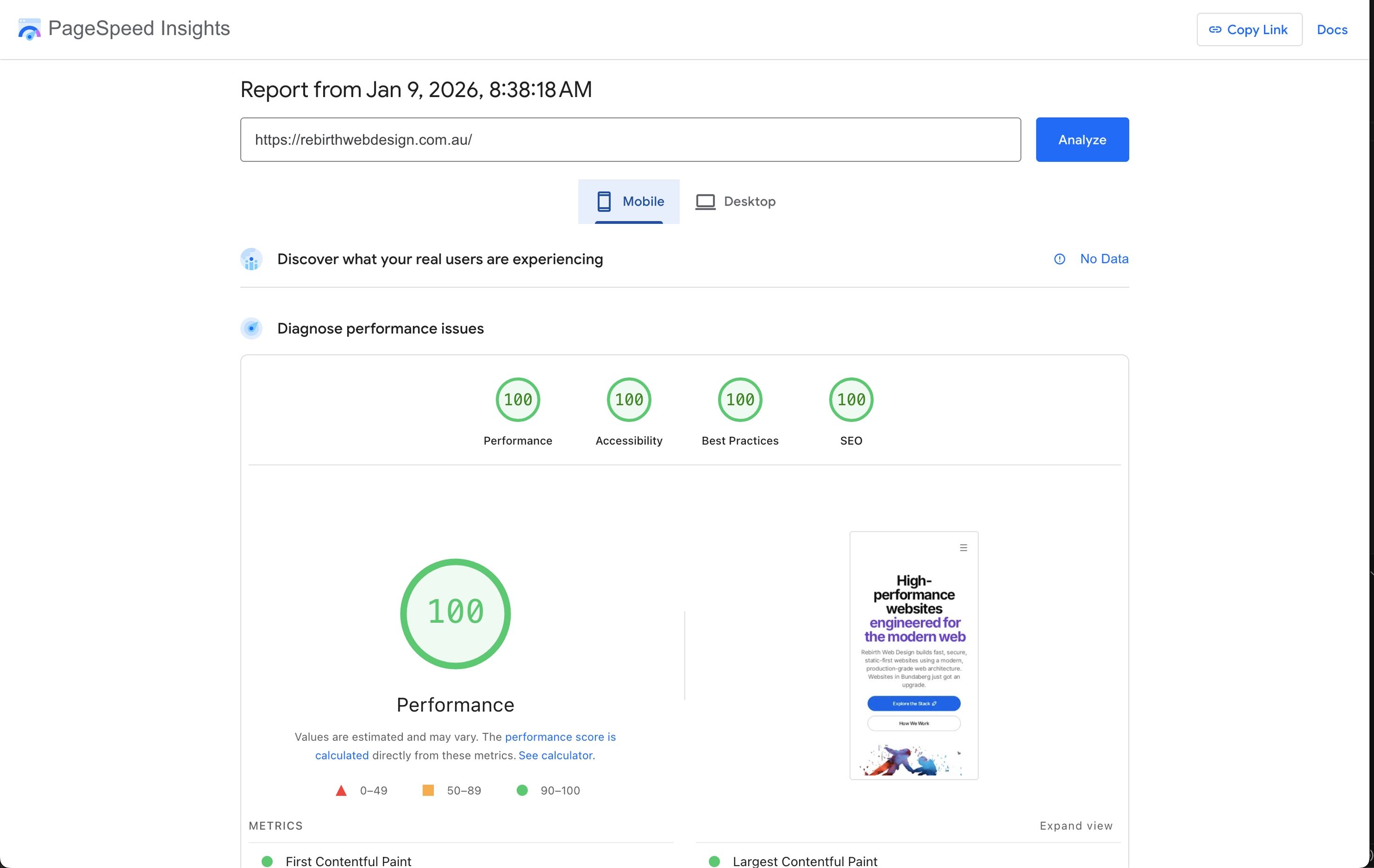
Ready to make your Bundaberg business agent-ready? At Rebirth Online we build high-performance, SEO-optimised sites that are structured for both human visitors and the AI systems that increasingly mediate discovery and booking. Let’s turn 2026’s record tourism numbers—and the agent internet that is forming around them—into bookings you actually capture. Contact us today.